
Education
DESIGN+SCIENCE 2026 FINALE: When the Sea Stops Being a Holiday Backdrop and Becomes Part of Our DNA
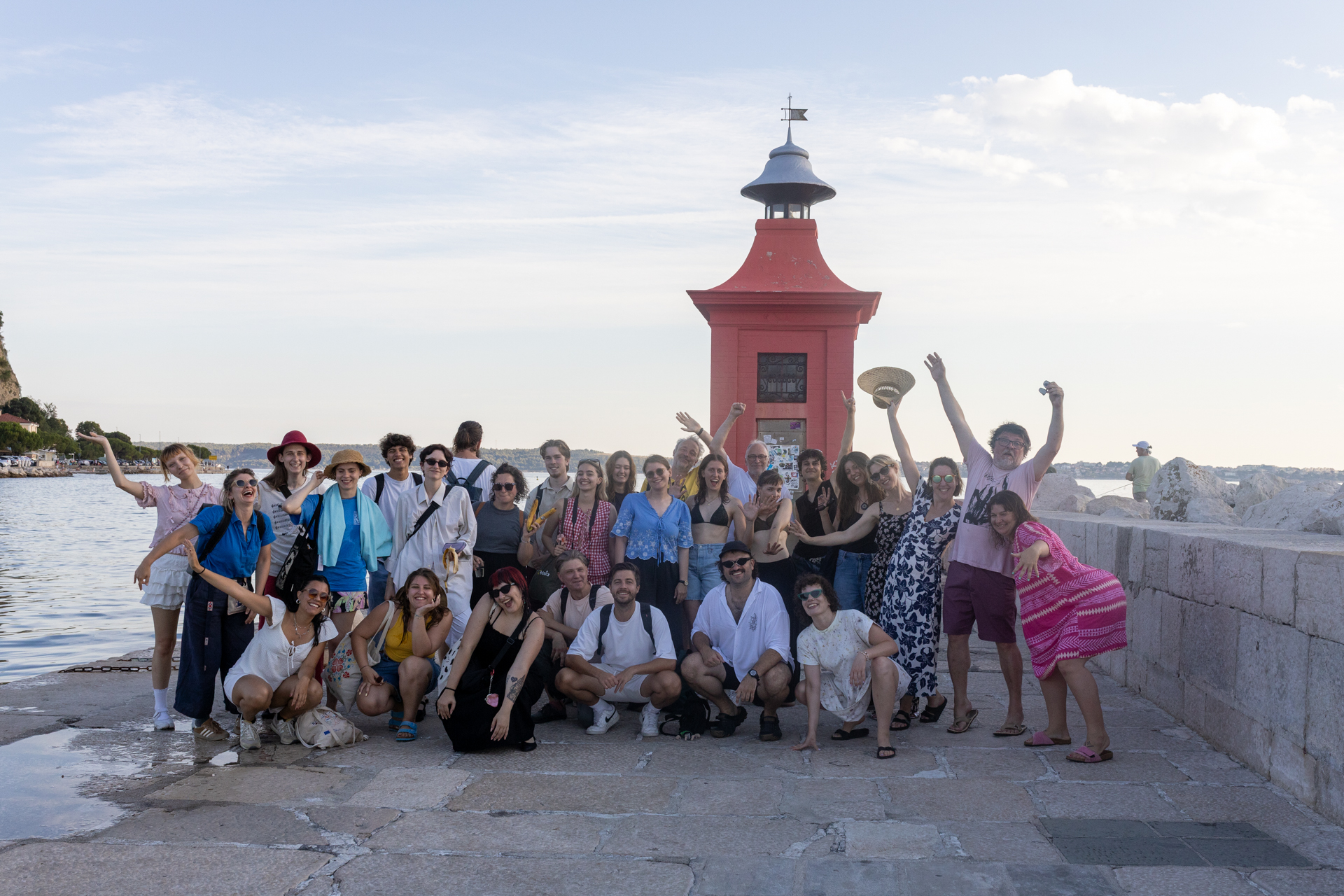
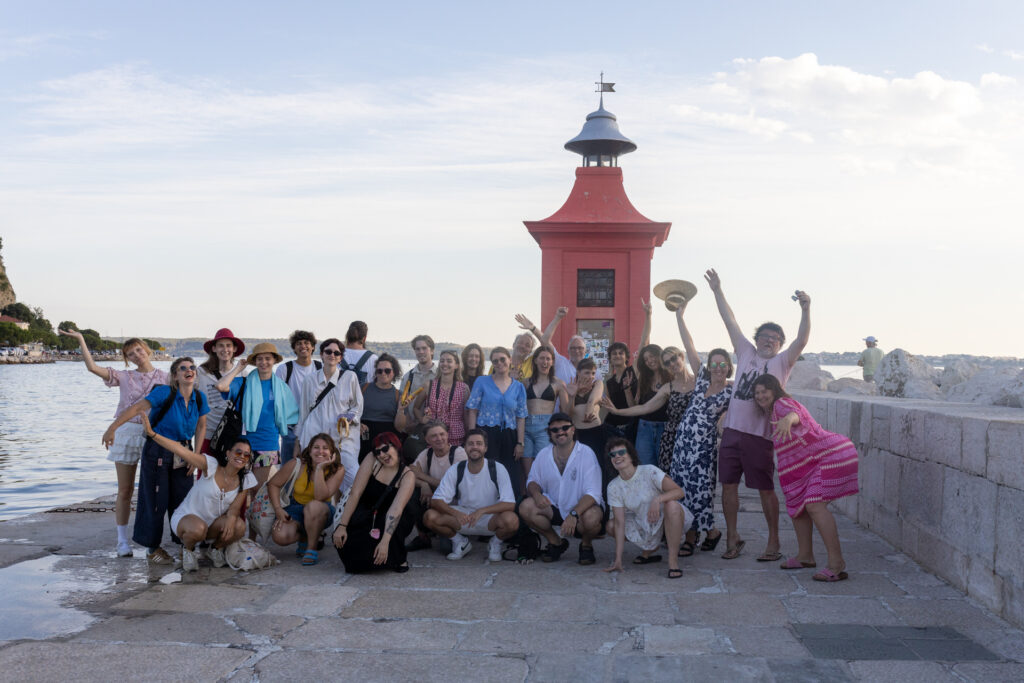
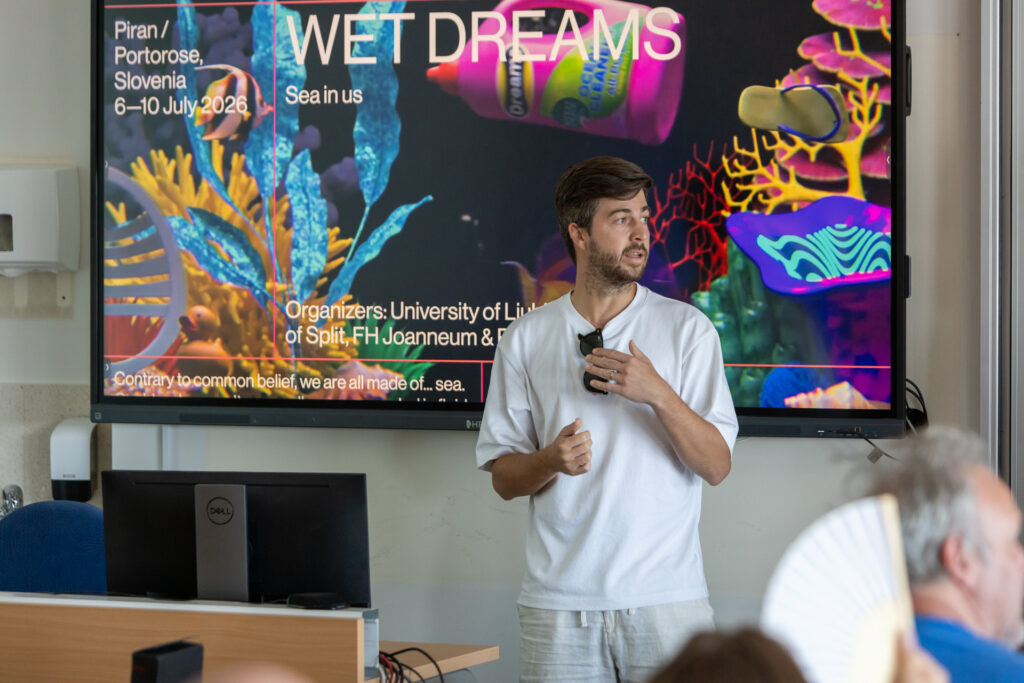
For most of the year, Piran spoils us with its picturesque charm, and in the summer, it surrenders completely to the rhythm of tourist bustle. But for us at PiNA, the past week in Piran meant something entirely different. It became a laboratory of radical ideas, a space for facing uncomfortable truths, and, we dare say, a breeding ground for a new kind of ecological empathy. Together with our long-standing partners—UL ALUO, the University of Split, and FH Joanneum from Graz—we successfully wrapped up the sixth edition of the international Design+Science summer school under the provocative title “Wet Dreams: Sea in us.”
When we sat down in a circle on the first day with 21 exceptional young researchers, artists, and scientists from all over the world, it was clear to everyone: we didn’t want to create just another summer school where lectures are passively digested and a few pretty graphs are drawn at the end. We wanted to break through the walls of the academic comfort zone. We wanted to challenge the most deeply rooted, yet most dangerous human belief—that we are somehow separate from the ocean.
From Climate Alarms to Acoustic Chaos Beneath the Waves
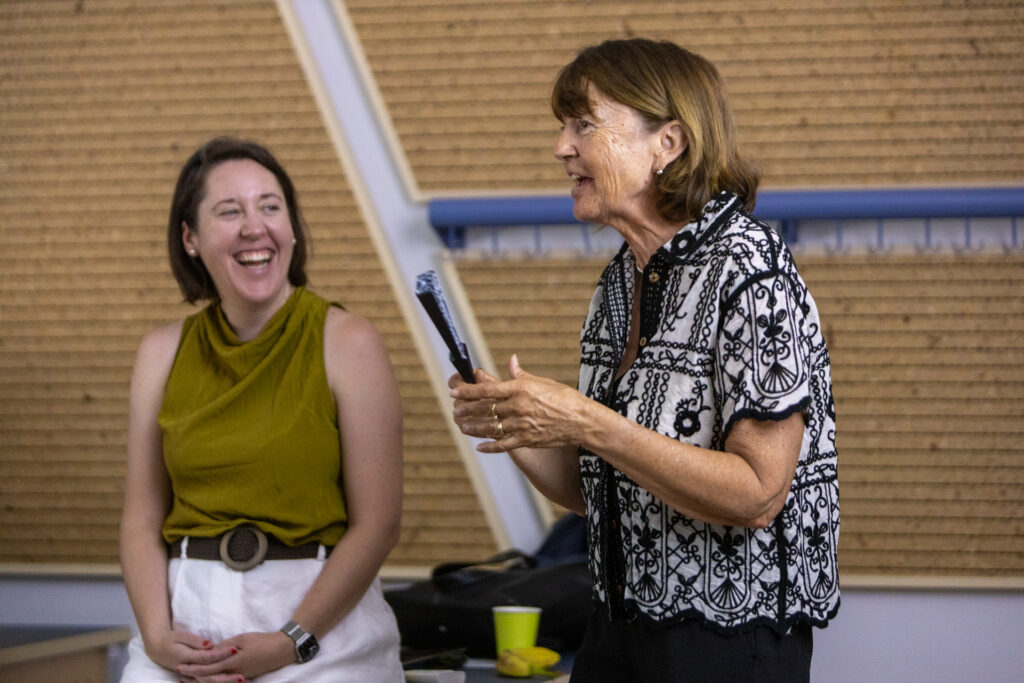
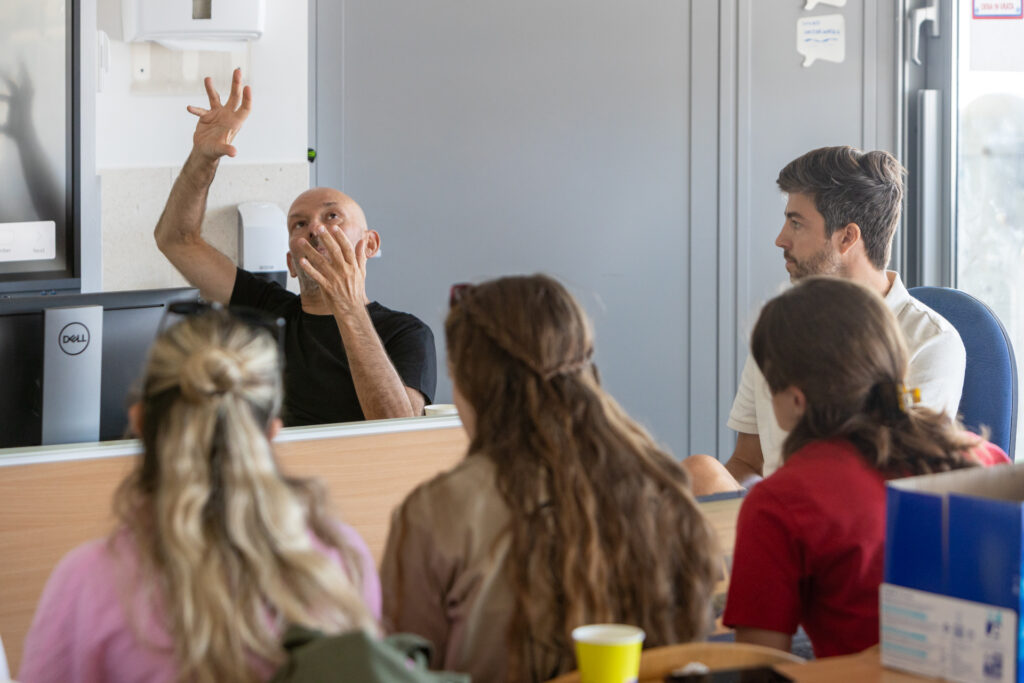
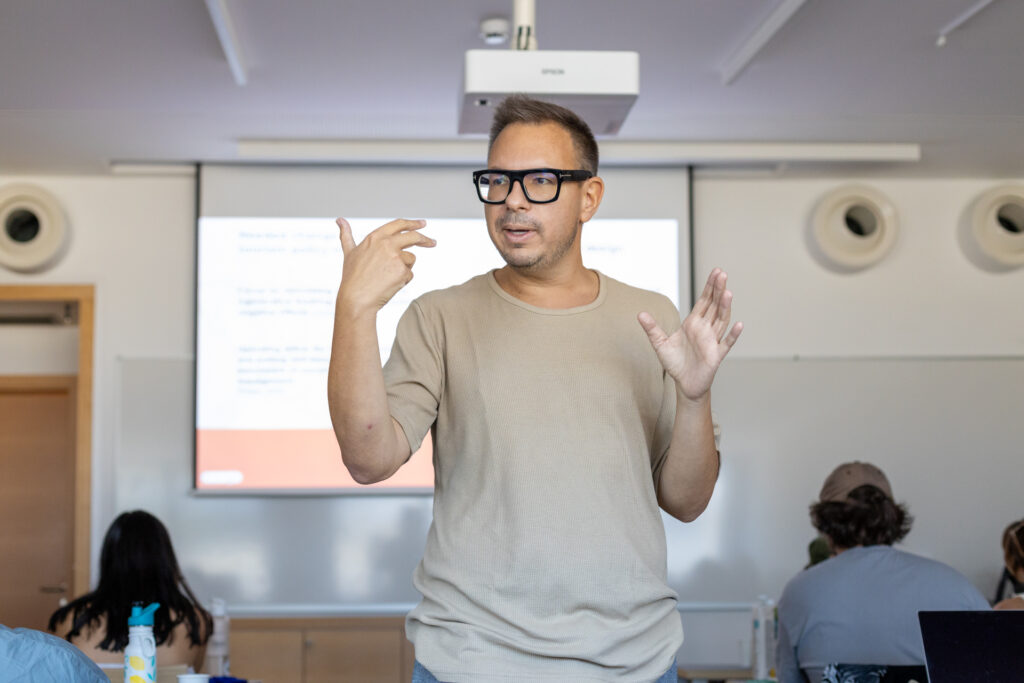
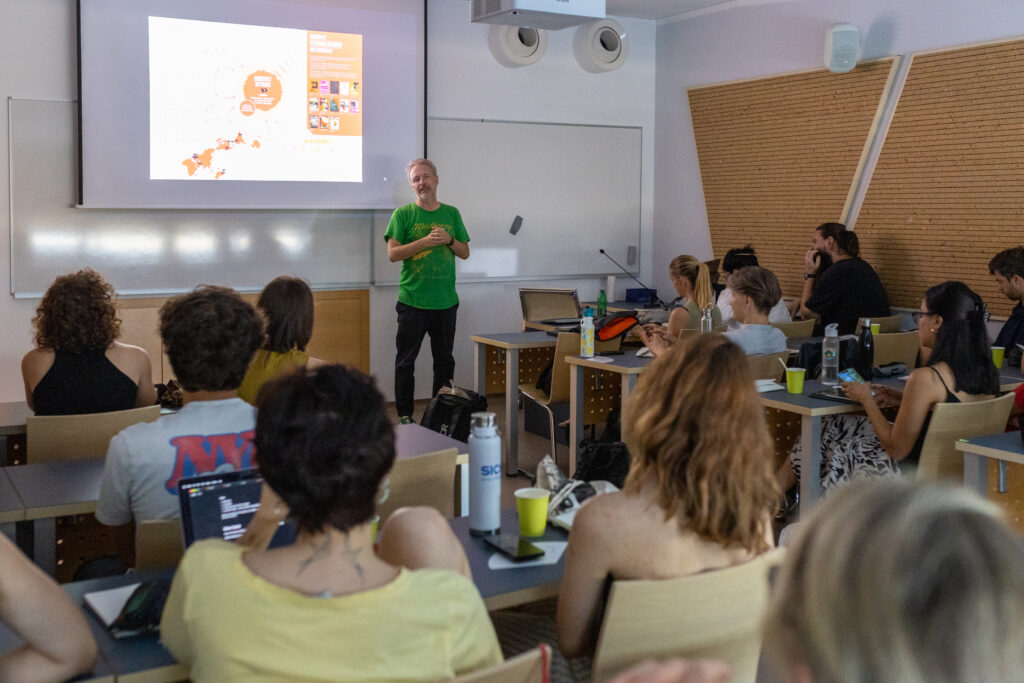
The first two days left us with mixed emotions. When climatologist dr. Lučka Kajfež Bogataj holds up an unfiltered mirror of unrealistic economic growth, and marine microecologist dr. Tinkara Tinta opens the door to the invisible yet vital world of marine microorganisms, you feel the heavy weight of reality. Sociologist dr. Oliver Vodeb followed up by calling us to a radical shift: forget about design that merely serves the market. It is time for “relational design” that builds what he calls “radical intimacies” with nature.
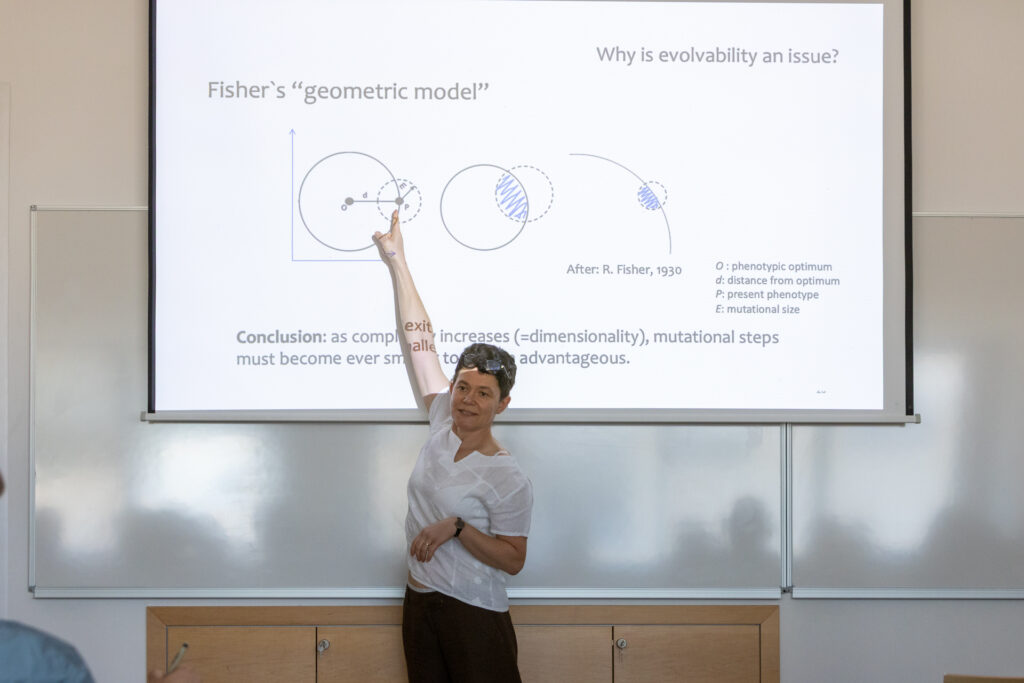
And to begin perceiving the sea as a living subject with its own rights, we first had to truly hear it. Artist Robertina Šebjanič brought the acoustic noise and ecological pressure beneath the surface directly to our ears through underwater recordings. Hearing the heavy industrialization of our bay through hydrophones breaks something inside of you. Evolutionary biologist dr. Mihaela Pavličev offered us a spark of hope by shedding light on the biological mechanisms of systemic adaptation, while dr. Elen Twrdy (dissecting maritime logistics) and dr. Miha Bratec (addressing the impacts of mass tourism and hospitality innovations) ensured we didn’t just stay lost in the clouds of theory, landing us back in the harsh realities of our local coastal environment.
Three Bold Visions
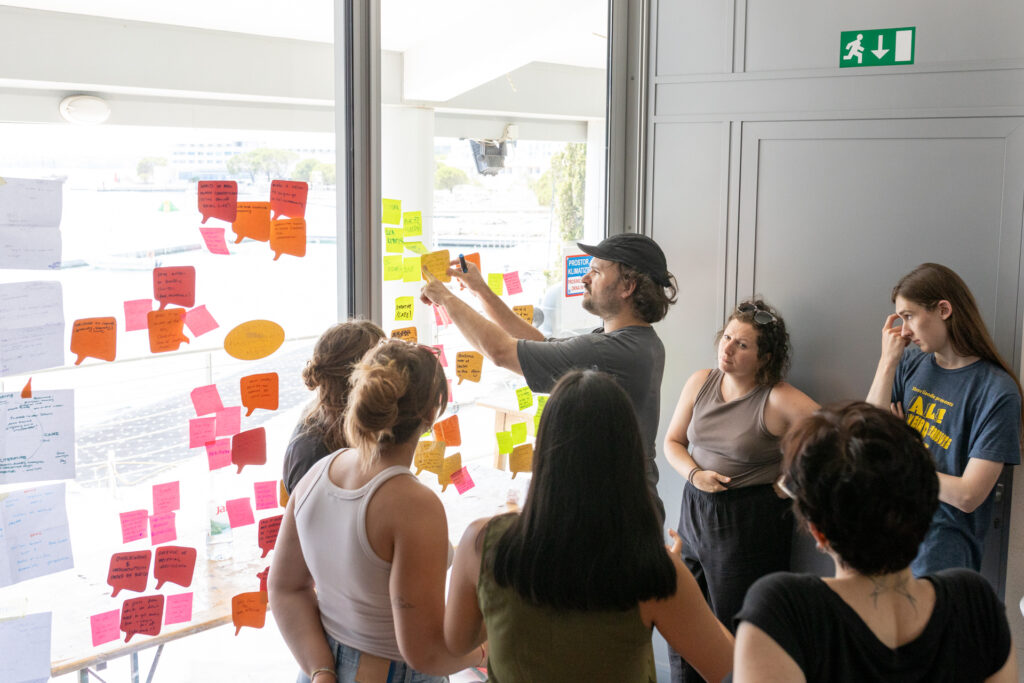
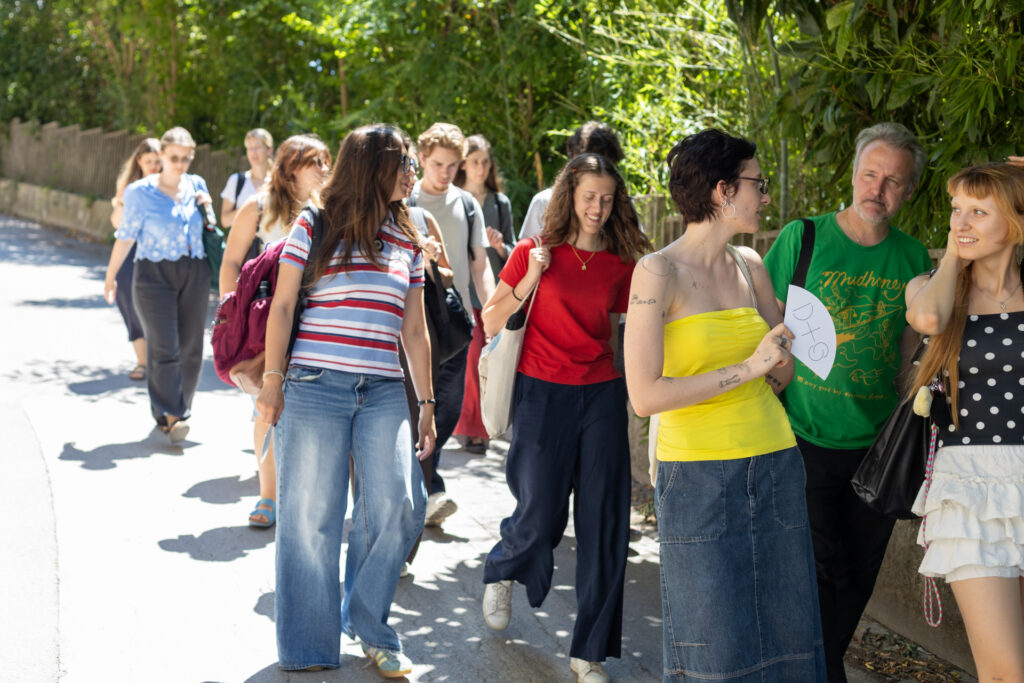
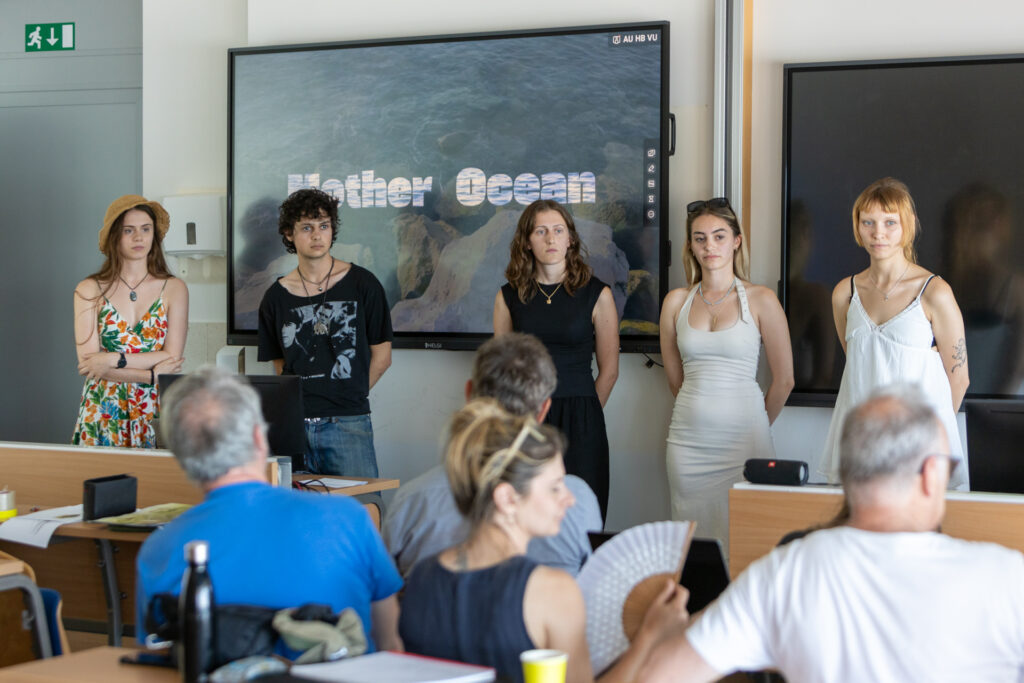
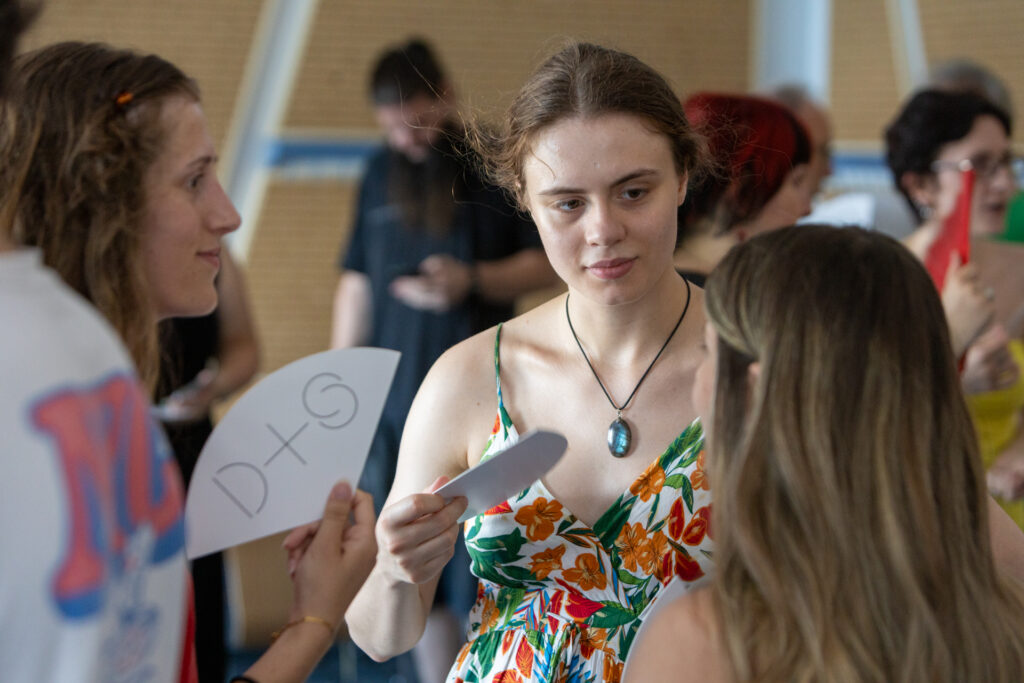
Once we locked the participants in the studio on Wednesday following their field research and boat excursion, our design mentors—Ivica Mitrović, Dorijan Šiško, Emil Kozole, and Illya Pavlov—took the reins. What happened over the next 48 hours reminded us once again why we do this. In record time, these young minds transformed heavy scientific data into three bold, speculative projects:
-
Short film: Group 1 drew from the concept of hydrofeminism to shoot a short film told directly from the perspective of the ocean. Through the story of the blue crab, they held a mirror up to humanity with a piercing question: if these “invasive” species arrived here on human ships and thrive due to our warming seas, aren’t humans the most invasive species of all?
-
The Marine Escape Room: Group 2 threw us into an interactive escape room simulation. In just one minute, players had to forage for food in a chaotic maze of plastic waste while navigating the deafening roar of ship engines. It is an adrenaline-inducing experience that forces you to feel the daily human-made trauma of marine life on your own skin.
-
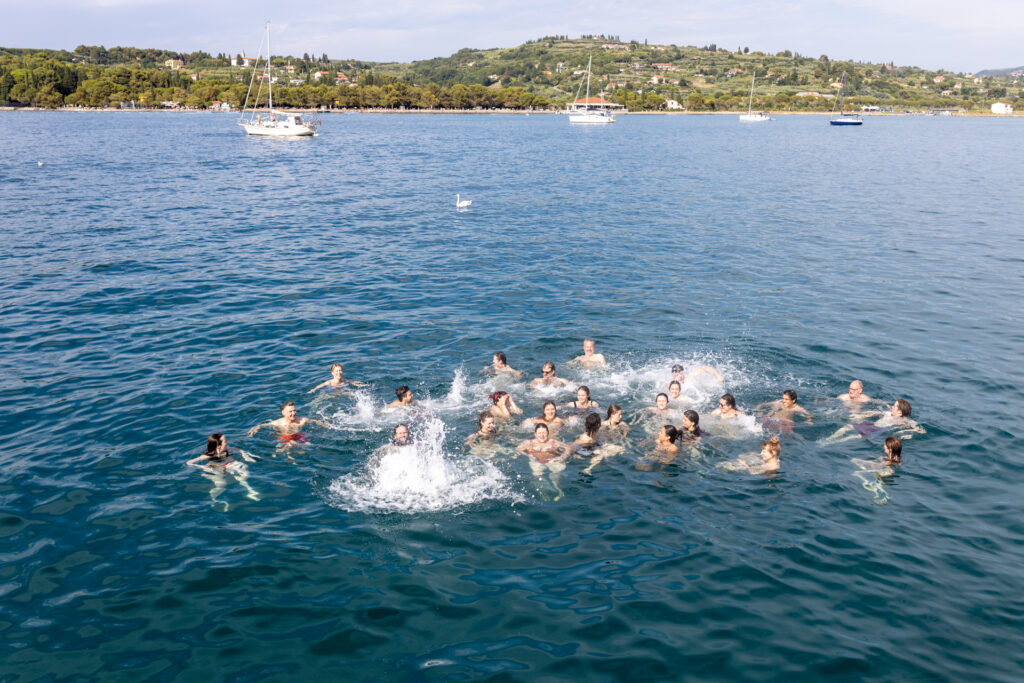
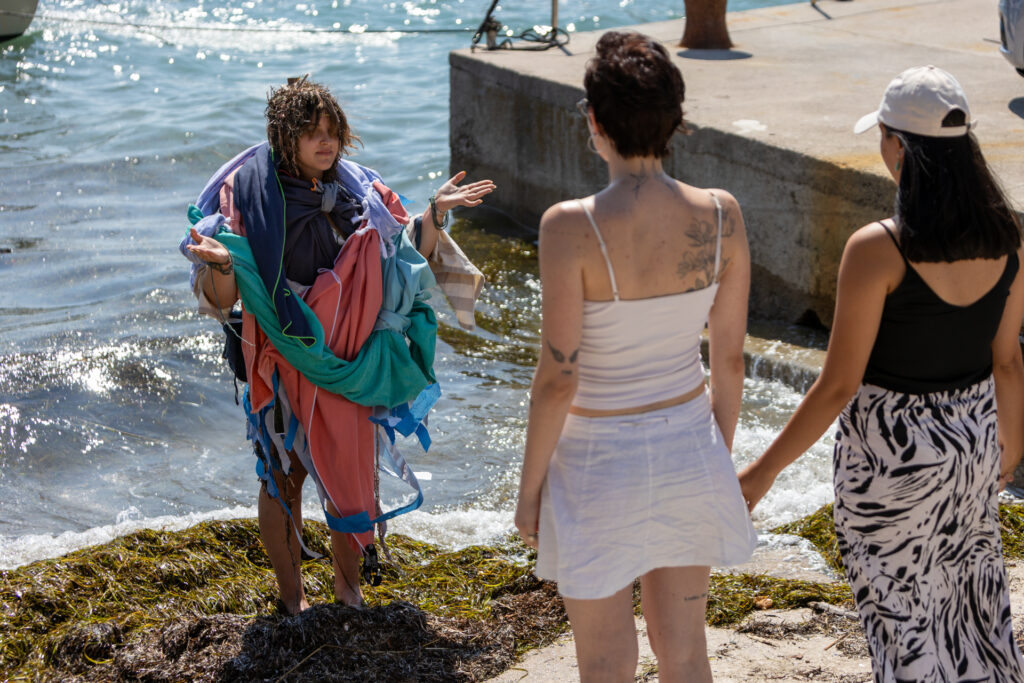
Ceremonial Knot of Soldonka – street performance: Group 3 moved us deeply with a performance. They interpreted beach towels as symbols of capital and spatial occupation that suffocate both locals and the sea. Through a modern mourning ritual for lost nature, they invited passersby to rebuild an empathetic bridge with the coastline.
What Are We Taking “Home”?
The stories created by our participants are not just design prototypes. They are loud wake-up calls. As organizers, we are incredibly proud to see that the younger generation is no longer looking for instant technological fixes that often only mask the symptoms. Instead, they dove into the hardest question of our time: who do we need to become as a society, and how must we change our habits to survive within our planetary boundaries?
The sea is not just a pretty summer postcard or an inexhaustible resource to be exploited. It is part of our DNA. And it is high time we start co-existing with it as a living subject.
*The D+S summer school was made possible by the Ministry of Culture of the Republic of Slovenia, the University of Ljubljana (RSF funds), and the Eutopia initiative.