
Education
Wet Dreams and Red Flags: Day One of the Design+Science Summer School in Piran
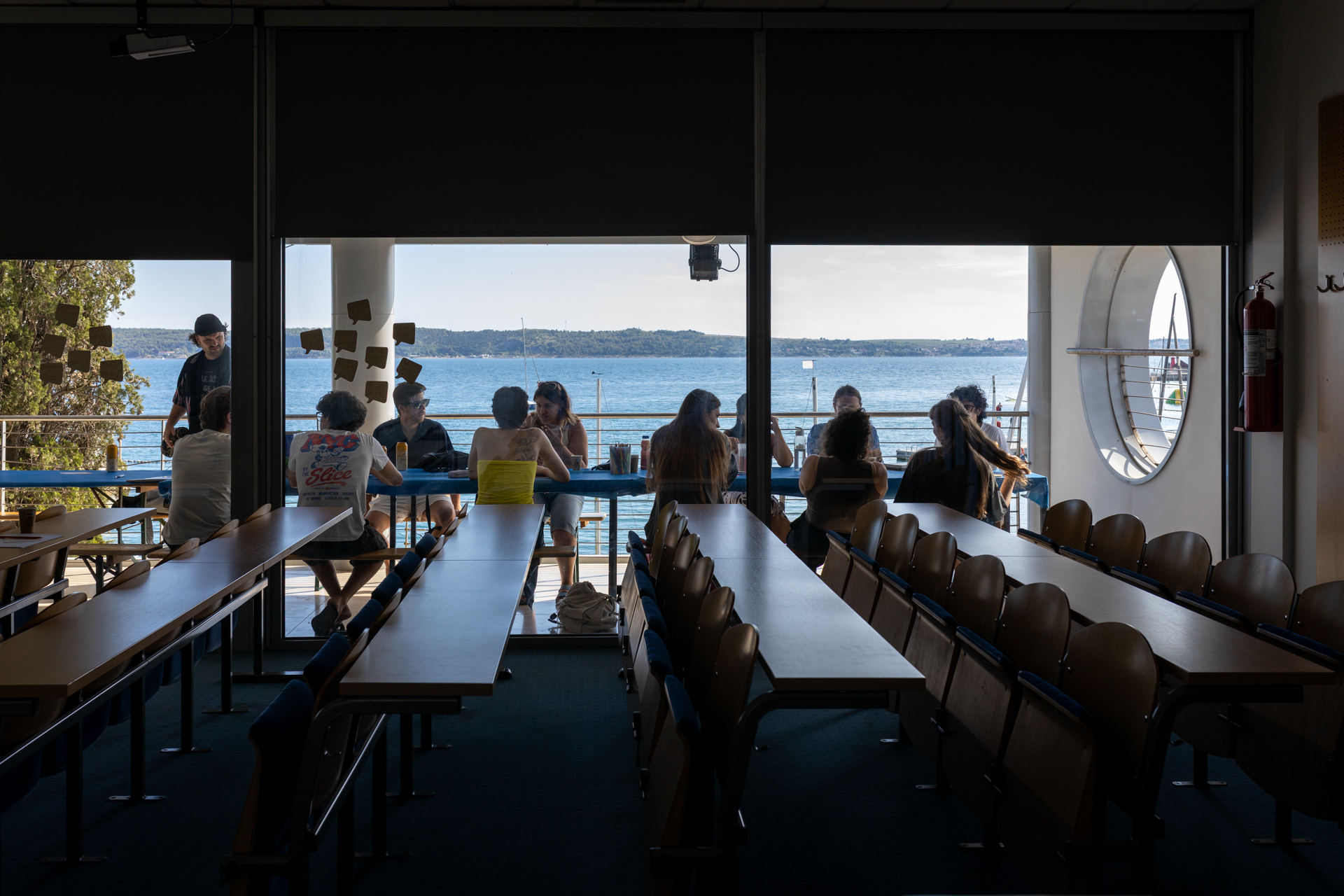
Yesterday, things kicked off in earnest in Piran and Portorož. Our Design+Science 2026 summer school opened its doors to 21 participants from all over the world under the overarching title “Wet Dreams: Sea in us.” The project—proudly co-created by the PiNA Cultural and Educational Association, the University of Ljubljana, the University of Split, and FH Joanneum from Graz—was born from a simple yet urgent desire: to break through the walls of academic comfort zones and collaboratively build a space where science and critical design meet.
This year’s edition is our collective attempt to challenge the misconception that we are separate from the ocean and to immerse ourselves—both literally and symbolically—in the sea. The fact is, we are all made of it. Our blood is salty, our cells float in a saline fluid, and although we left the water ages ago in our evolutionary journey, the sea has never left us.
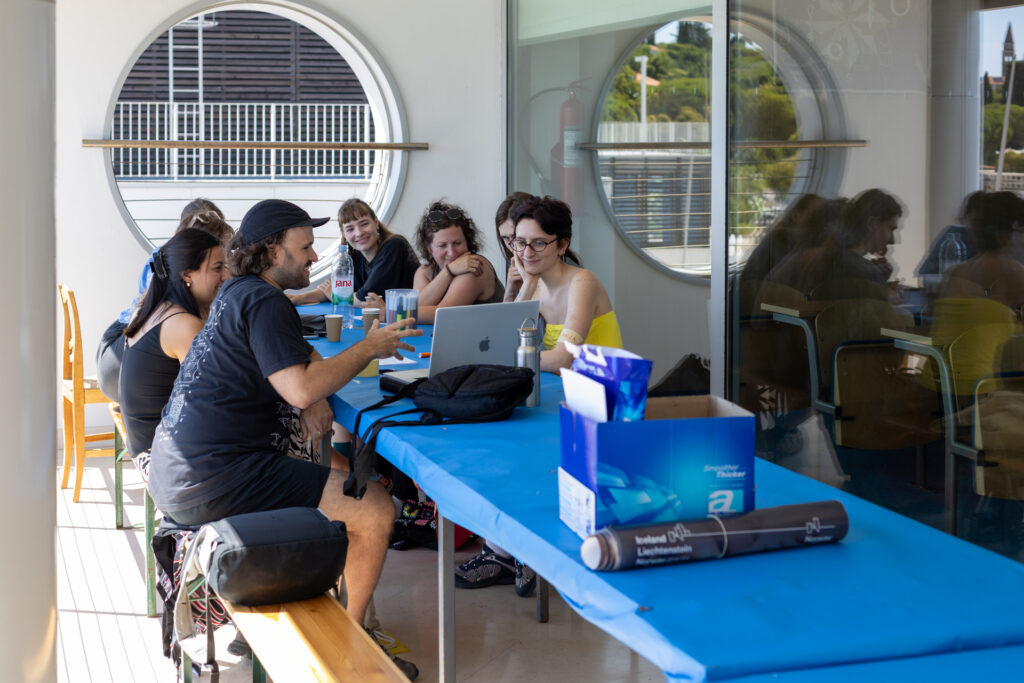
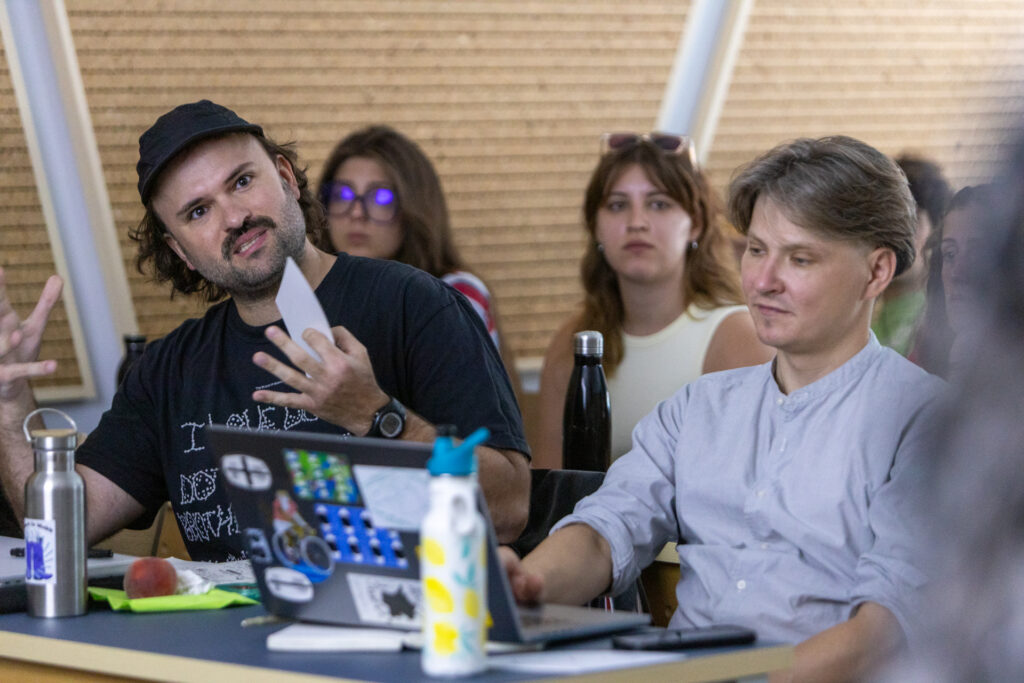
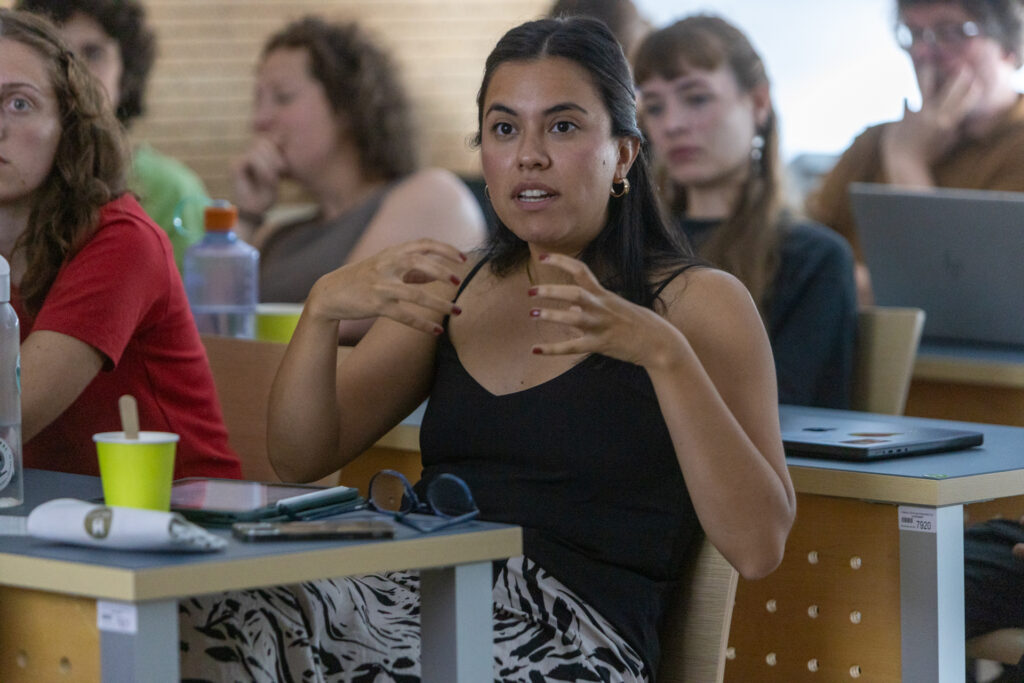
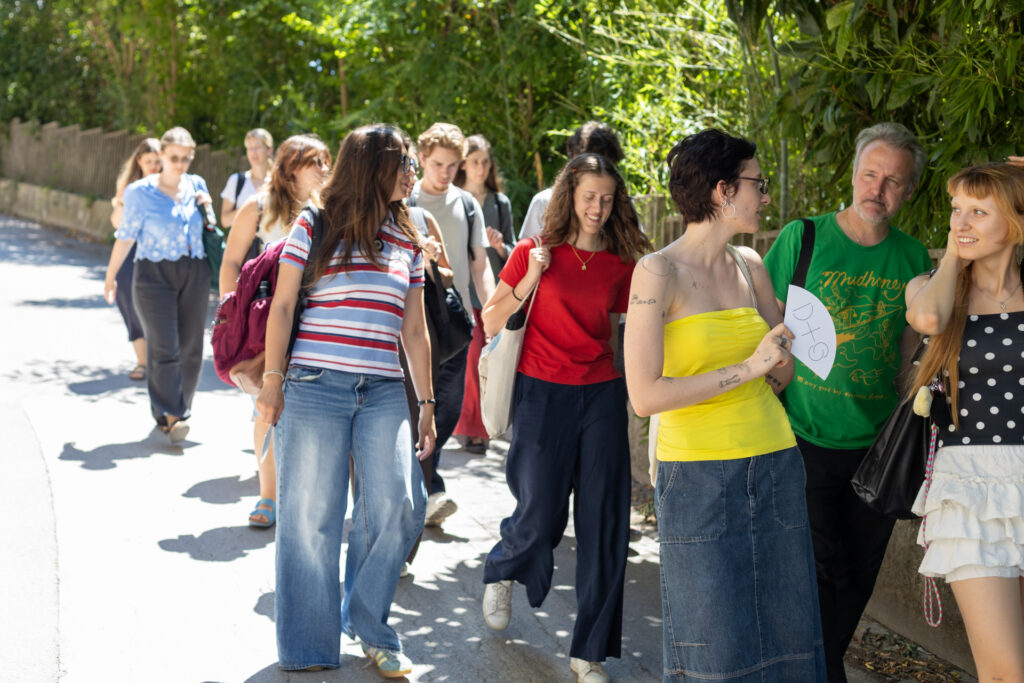

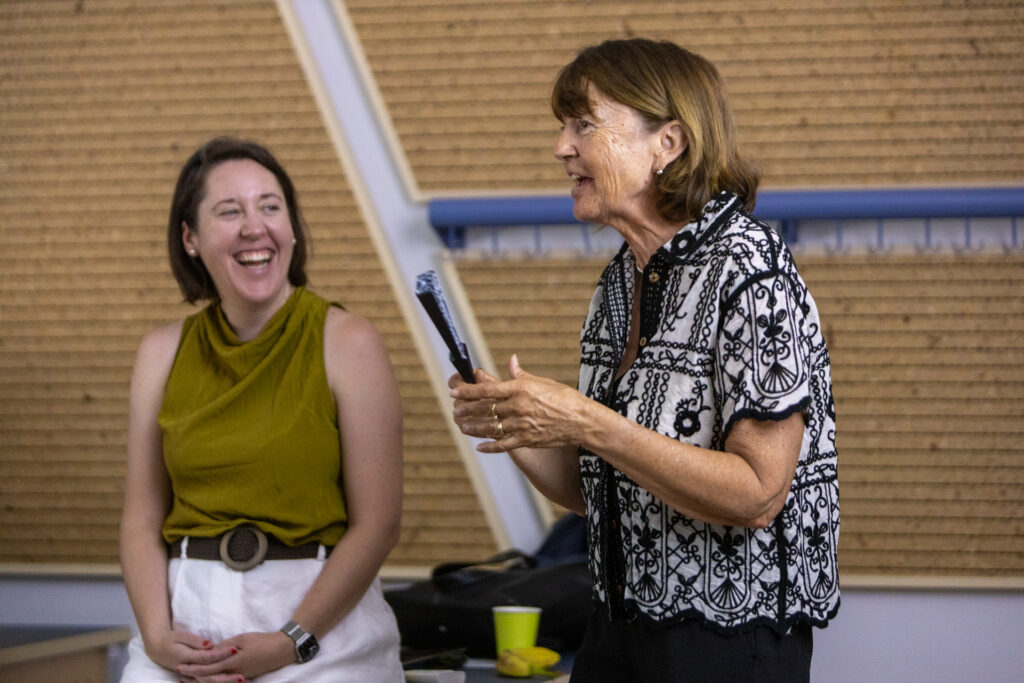
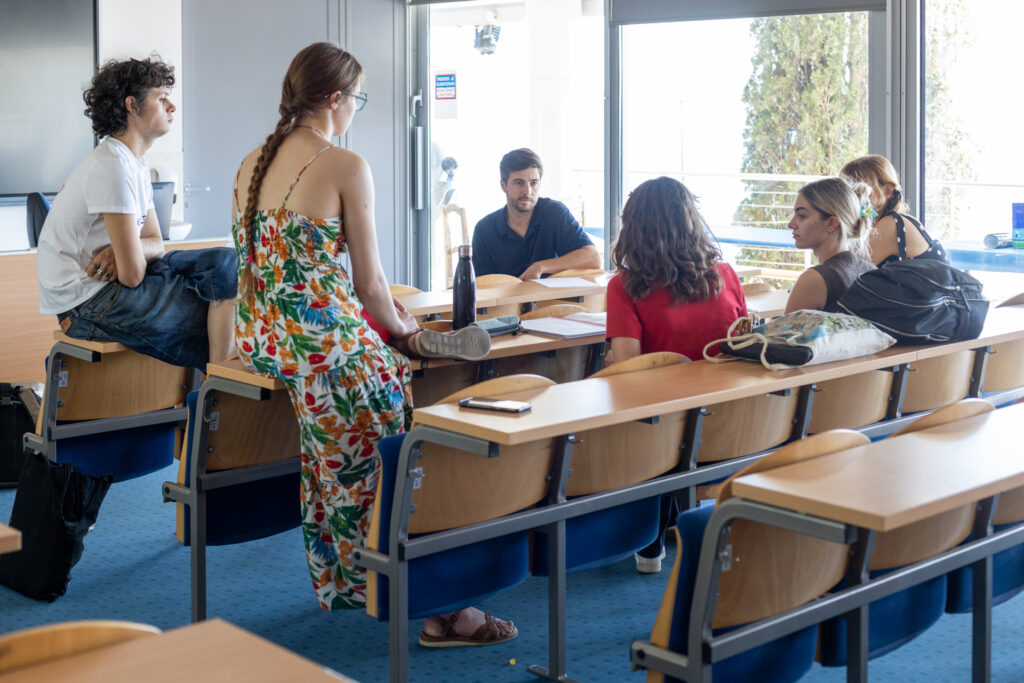
Our design mentors, Dorijan Šiško, Emil Kozole, and Illya Pavlov, wasted no time in splitting the participants into three working groups. Until Friday, they will attempt to visualize, map out, and perhaps even resolve pieces of our fragile relationship with this aquatic planet. But before the groups could get to work, we needed a foundation. Data. The truth.
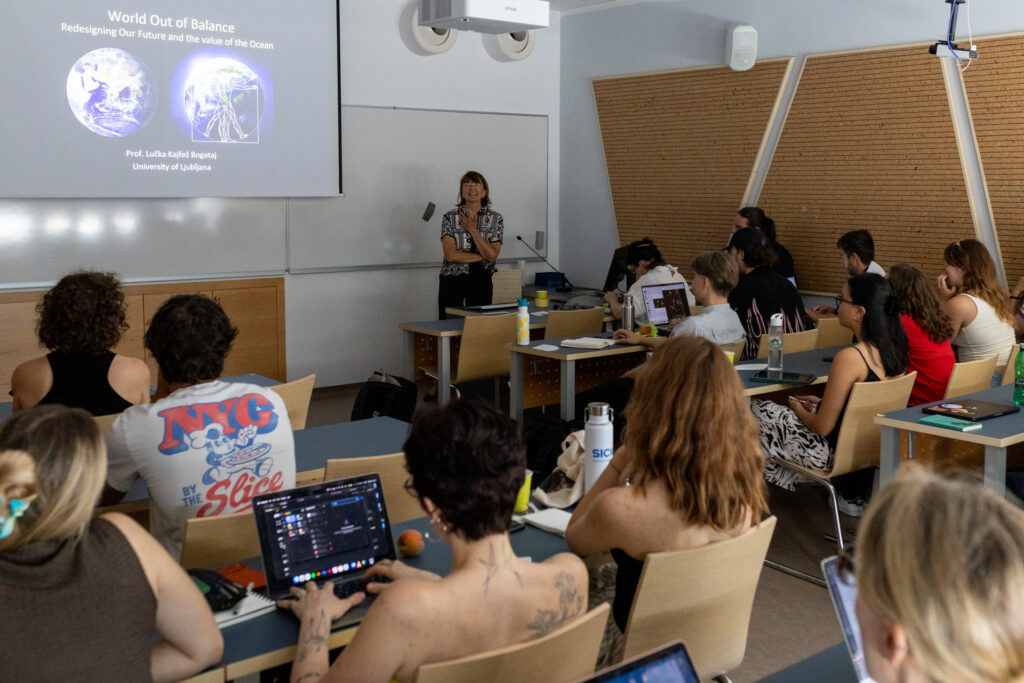
Lučka Kajfež Bogataj: From “Object” to “Subject”
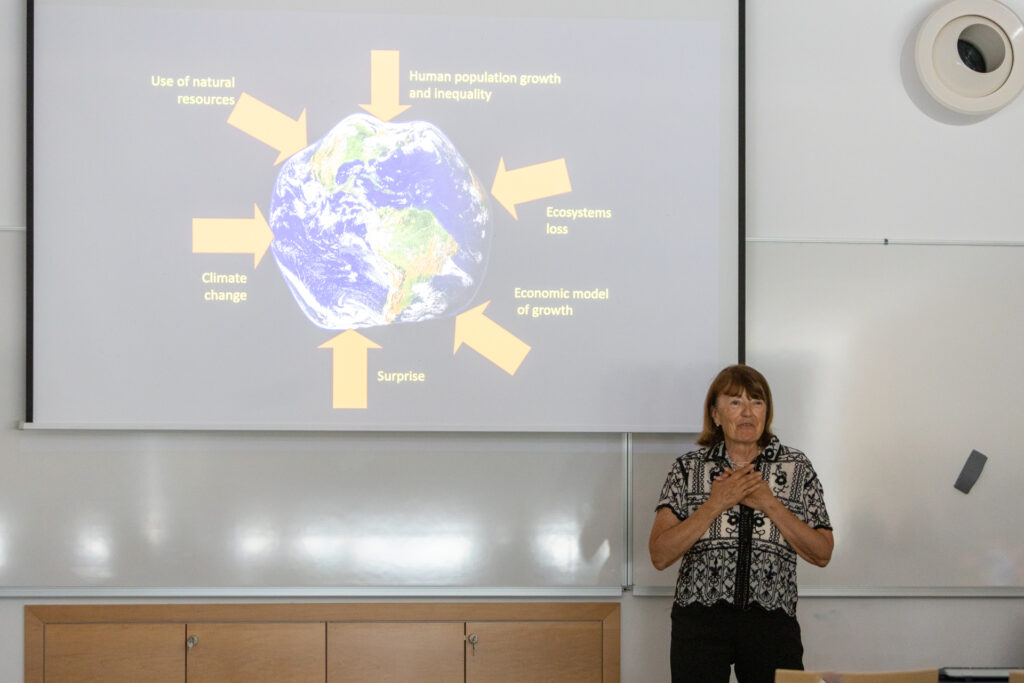
When climatologist Dr. Lučka Kajfež Bogataj takes the stage, the room goes silent. She does not sugarcoat her words. Instead, she held up a mirror to us: economic growth successfully alters our lifestyles, but it does not change the fact that our population keeps growing and that we consume more than the planet can sustain.
“Economic growth does not equal the growth of natural resources. The amount of water on this planet remains exactly the same as it did millennia ago. All we accomplish with unrealistic economic growth is the accumulation of waste and emissions.”
She took us through a historical overview, from the 1970s—when destroyed, dead lakes prompted the creation of the first ministries of the environment—all the way to the turning point of 2025, when the long-standing “green transition” officially escalated into a red flag. Today, a third of our CO2 is absorbed by the ocean, causing it to rapidly acidify.
The core message that shook the room was this: The real problem is not that politicians are bad, but that they simply do not understand the complexity of the issue. This is precisely where science, with its data, and design, with its empathy, must step in. This is the essential role of awareness design. If we want to survive within planetary boundaries, we must begin to perceive the ocean as a living “subject” with its own rights—as a sacred entity in urgent need of responsible moral stewardship.
Tinkara Tinta: The Secret Life of an Invisible Ecosystem
Shifting from the macro level of planetary change, marine micro-ecologist Dr. Tinkara Tinta took us deep below the surface—into a world invisible to the naked eye, yet one upon which the entire planetary balance depends. Through her lecture, we discovered the unknown and independent reality of the salty water mass that covers three-quarters of our planet.
Microorganisms in the sea are not passive inhabitants; they are the engine of a 3.8-billion-year-old self-regulating system. Understanding how they function teaches us critical lessons about coexistence. It reminds us that every reckless human action on land has a destructive echo in this delicate, invisible world. If nowhere else, we are absolute strangers in the sea—and it is high time we begin to respect this unknown reality.
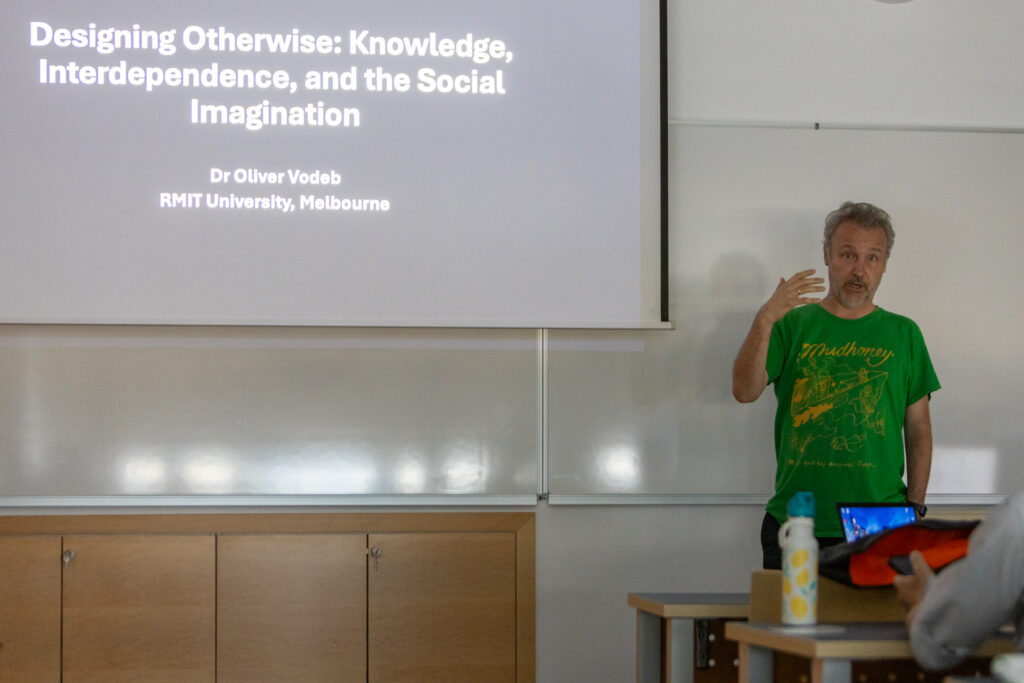
Oliver Vodeb: Against the Totalitarianism of Pleasure and Branding
In the final part of the theoretical block, sociologist Dr. Oliver Vodeb challenged us with a radical societal critique. How do we design for a world dominated by capitalism? A system that rules over us through food, drugs, and technology—systems intentionally engineered around the principles of instant pleasure and addiction.
Without beating around the bush, Vodeb drew parallels between modern branding and the totalitarian propaganda techniques of the past. If we want to step out of this toxic “take-make-waste” cycle, we need something radical. We need relational design and what he calls radical intimacies. We must design relationships, not just products.
Drawing on Nora Bateson’s concept of warm data, we examined the qualitative interdependencies that connect complex systems. Design can no longer be subservient to the market; it must be bio-centric (life-centered) and inextricably linked to social justice. Our social imagination must become capable of prefiguring “real utopias.” The questions we are raising are not just ethical—they are ontological: What are we becoming, and what should we be?
Looking Ahead: A Partner and Peer, Not a Postcard
Following these intensive lectures, theory was put into practice. The participants retreated into the studios of the Faculty of Maritime Studies and Transport—our main venue—alongside their mentors to kick off the design sprint process.
As Borut Jerman (cofounder of Design+Science Summer School) pointed out at the end of the day: we can no longer treat the sea merely as a resource, a dumping ground, or a pretty summer postcard. We have the sea in our DNA; we share most of it with diverse living organisms. And it is precisely by and in the sea that we can rethink new, alternative futures.
The design sprint has officially begun. Stay tuned as we spend the coming days working alongside artists, evolutionary biologists, and tourism researchers to find the answers this planet desperately needs.