
Notifications
CROSS-BORDER CONVERSATIONS: MIRNA BUIĆ
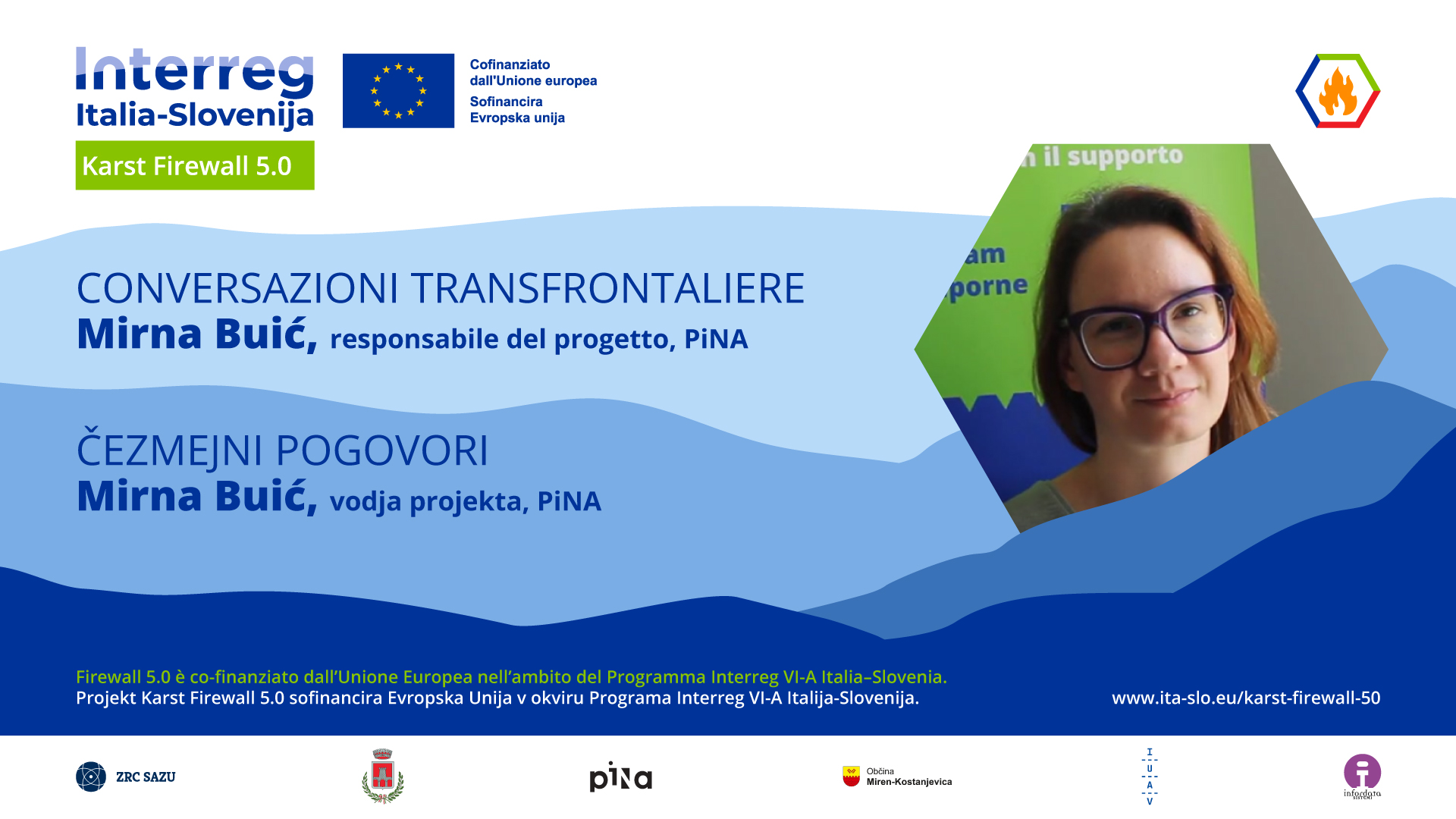
We sat down with Mirna Buić, project manager at the cultural and educational association PiNA, to talk about the Karst Firewall 5.0 project and the role of public participation in cross-border wildfire prevention. With a background in participatory processes, social innovation, and cross-border collaboration, she explains how communication, stakeholder engagement, and co-designed workshops help strengthen cooperation, raise public awareness, and support the development of innovative strategies for wildfire prevention and adaptation in the cross-border Karst region.
Could you explain what the Karst Firewall 5.0 project is about?
The Karst Firewall 5.0 project focuses on innovation, on introducing innovative solutions for prevention. It is a project that, through field research, analysis and participatory processes, aims to introduce innovative solutions and strategies for adaptation to future fire risks and future wildfires.
Could you tell us something about the partnership and the different partners involved in the project?
The Karst Firewall 5.0 project involves a diverse partnership, including companies, research institutions, universities, municipalities, and NGOs like PiNA. Cross-border cooperation is essential in the Karst region, which spans both Italy and Slovenia and has experienced major wildfires. Each partner contributes specific expertise, from scientific research and data analysis to communication and participatory processes.
What is PiNA’s role within the project?
PiNA leads communication and organises workshops for both professionals and the public to involve all relevant actors in designing wildfire adaptation strategies. We specialise in participatory processes, creating safe spaces where participants can freely share their opinions and provide feedback. This interaction with different stakeholders is the most rewarding part, as it helps coordinate efforts and develop practical, shared solutions.
Why is cross-border cooperation so important in this context?
The Karst area lies on both sides of the border, in Italy and Slovenia, and was affected by the largest wildfire in Slovenia’s history. Projects that connect both sides are essential to ensure that institutions, communities, and stakeholders can work together effectively. Each participant brings added value, but coordinating these voices can be challenging. Nevertheless, this cooperation is crucial for developing meaningful innovations and services.
How does this project relate to PiNA’s previous experience?
Methodologically, the project aligns closely with our past work in social innovation, strategy development, and participatory budgeting. We’ve participated in many similar projects, including cross-border initiatives in culture, citizenship, and education. This experience helps us play a key role in prevention and adaptation strategies for wildfires.
Who are the main beneficiaries of the project?
Local communities, forest rangers, civil protection services, and the general public benefit the most. Through awareness-raising, workshops, and information activities, they gain additional tools and skills to respond to wildfire risks. Participation is key to developing effective and shared solutions.
What is the potential for this project beyond the Karst region?
The Karst Firewall 5.0 project represents a good practice that can be replicated in other contexts and territories. Its participatory, cross-border approach has strong potential for transferability, strengthening dialogue and better preparing communities for future challenges.
The Karst Firewall 5.0 project shows how collaboration, research, and community engagement can work together to strengthen wildfire resilience in the Karst region. By involving local actors, institutions, and the public in participatory processes, the project not only improves preparedness but also builds shared knowledge and practical solutions that can be applied across borders. Its approach demonstrates that prevention, cooperation, and informed action are key to protecting both people and the landscape from future wildfire risks.
This interview is part of the series Cross-Border Conversations, which brings together voices from both sides of the Italy-Slovenia border. Through the lens of the Karst Firewall 5.0 project, the series highlights the knowledge, stories, and everyday realities of those working to strengthen resilience in a landscape increasingly shaped by climate change.